
What Is the Role of a Notary in South African Legal Processes?
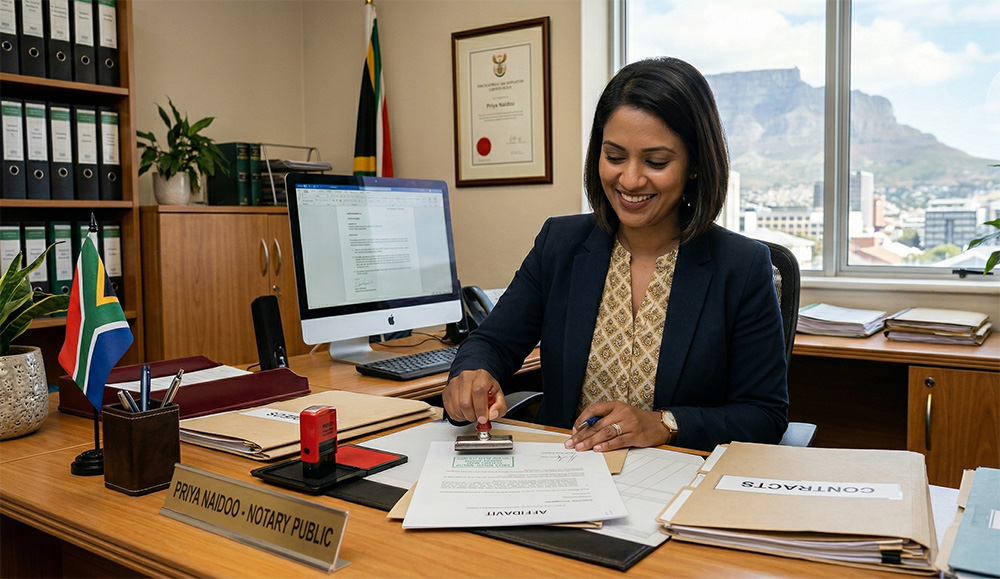
A Notary Public may be required when handling significant legal papers in South Africa. What precisely do notaries perform, though, and why are they so crucial to legal procedures?
This tutorial explains what a notary does in South Africa, when you need one, and how they can help make sure your documents are both legally and globally acknowledged.
What Does a South African Notary Public Do?
The High Court of South Africa appoints a Notary Public, a specialised lawyer who has passed additional tests.
A notary has the power to carry out particular legal tasks, such as authentication, certification, and the writing of specified formal documents, in contrast to an ordinary attorney.
Notaries are trusted public servants in the judicial system because they are held to a higher standard of care and impartiality.
The Fundamental Function of a Notary
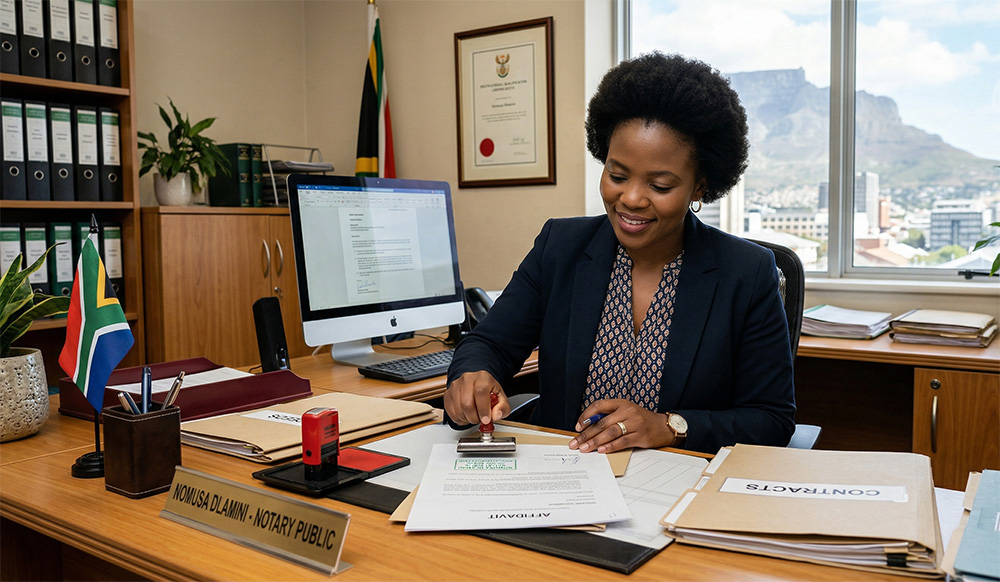
A notary’s primary responsibility is to guarantee the legitimacy, dependability, and authenticity of documents and legal transactions.
These are the main duties:
1. Identity Verification and Fraud Prevention
A notary attests to:
- The signer’s identity
- that they comprehend the information
- something they voluntarily sign
This procedure guarantees legal integrity and aids in the prevention of fraud.
2. Observing and Verifying Signatures
Notaries serve as impartial witnesses when significant documents are signed.
Their official seal and signature attest to the following:
- The signature on the document was accurate.
- The parties were correctly recognised.
This gives the document more legitimacy and legal weight.
3. Verifying Documents for Lawful Use
Notaries attest to the authenticity and validity of papers.
This comprises:
- Agreements
- Attorney powers
- Affidavits
- Police Clearance Certificates
- Identity or academic documents
Document acceptance in legal, business, and governmental processes is guaranteed by their certification.
4. Creating Notarial Contracts and Deeds
For some legal documents to be legitimate, a notary must prepare them.
Among them are:
- Antenuptial agreements
- Notarial leases
- Notarial ties and servitudes
The legal enforceability of these documents is higher.
5. Giving Declarations and Oaths
Oaths and affirmations can be administered by notaries for:
- Affidavits
- Statements of law
- Statutory proclamations
This is frequently necessary for official submissions or legal procedures.
6. Getting Documents Ready for Global Use
Helping documents be accepted overseas is one of a notary’s most significant responsibilities.
They
- Notarise documents for usage abroad.
- Help with legalisation and apostilles
- Verify adherence to international legal requirements
This is necessary for:
- Immigration
- Studying overseas
- Global commerce
- Transactions involving foreign property
International recognition is far more likely for documents that have been notarised by a notary.
The Significance of Notaries in South African Legal Procedures
In both domestic and foreign transactions, notaries are essential to preserving confidence and legal certainty.
Their participation guarantees:
- Documents have legal validity.
- Transactions are carried out correctly.
- There is less chance of fraud.
- Documents are applicable worldwide.
A document is often deemed totally genuine only after it has been notarised.
What Makes a Commissioner of Oaths Different from a Notary?
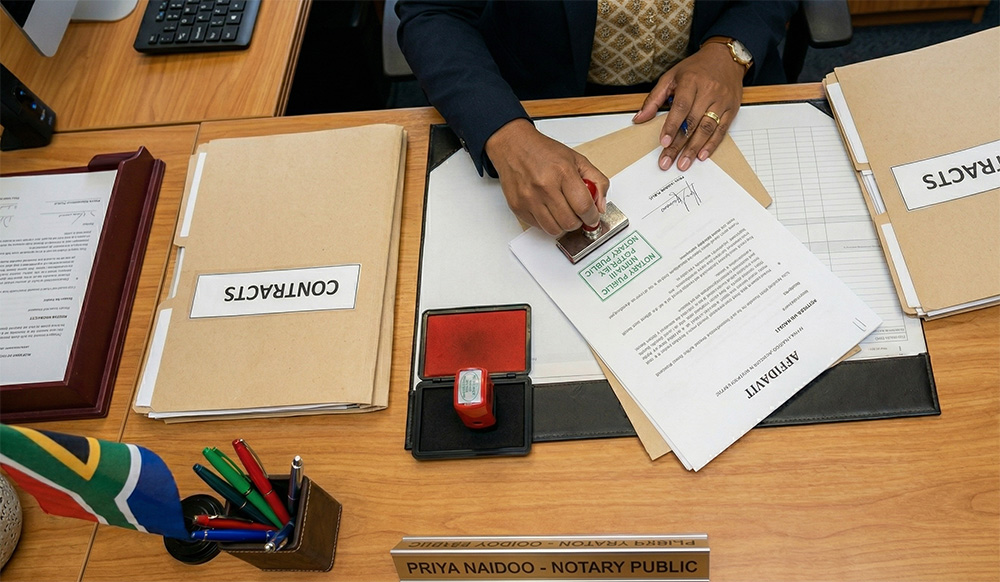
A Notary Public and a Commissioner of Oaths are frequently confused.
Commissioner of Oaths:
able to attest to signatures and certify copies
mostly utilised locally
Notary Public:
- Possesses specific legal power
- Necessary for official legal papers
- Crucial for use abroad
In summary, notaries are needed for more complicated or globally recognised papers and function at a higher legal level.
When Is a Notary Necessary?
A notary is usually required when handling:
- Documents being sent abroad
- Agreements pertaining to property
- Contracts for marriage (ante-nuptial agreements)
- Attorney powers
- Commercial or business contracts
- Certified copy for usage abroad
- Concluding Remarks
As a reliable authority who guarantees that documents are genuine, correctly completed, and legally binding, a notary public is essential to South Africa’s legal system.
Working with a notary gives you the assurance that your documents will withstand legal scrutiny both domestically and internationally, whether you’re dealing personal, business, or international affairs.
Need a Notary in South Africa?
We at Quick Notary make notarisation quick, easy, and dependable. Our staff can assist you with notarising, authenticating, or preparing papers for usage abroad.
Get in touch with us now to begin.


Leave a Reply
Want to join the discussion?Feel free to contribute!