
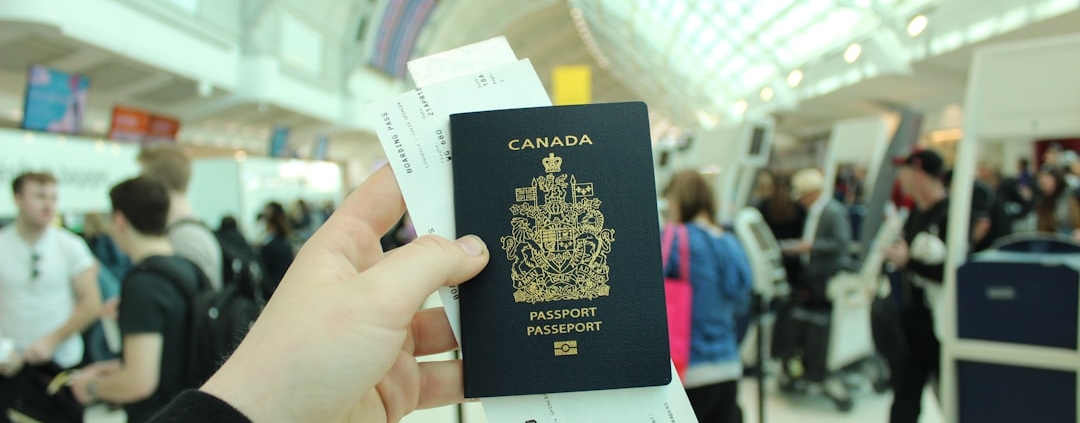
You’ve spent eighteen months building your Express Entry profile. The CRS score finally clears, the IELTS is filed, and then it lands: an Invitation to Apply from IRCC, with a 60-day clock attached. Suddenly the bottleneck isn’t your score, it’s a stack of South African documents that need to be authenticated correctly before they’re worth anything in Ottawa.
The good news for South Africans applying for Canadian permanent residence (PR) is that the authentication route in 2026 is dramatically simpler than it was two years ago. The bad news is that most online guides still describe the old one.
Canada is now a Hague country
The biggest change happened on 11 January 2024, when Canada joined the Hague Apostille Convention. South Africa has been a member since 1995. Before Canada’s accession, a South African document destined for IRCC had to be authenticated by DIRCO and then legalised by the Canadian High Commission in Pretoria.
Two queues, Two fees, Two timelines.
That second step is gone. A South African public document with a single apostille from DIRCO or the High Court is now legally recognised in Canada without any further consular step. If you’re reading older blog posts that describe sending things to the Canadian High Commission, ignore them.
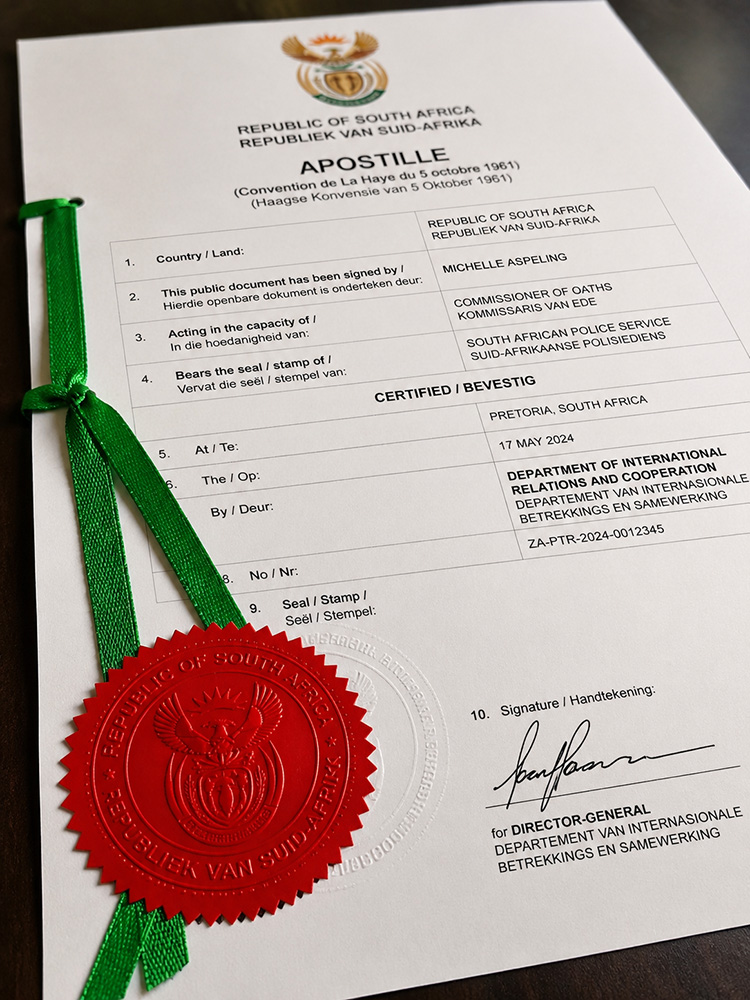
Apostille vs notarisation: which one your document needs
People lose weeks confusing these two. They are not interchangeable.
An apostille is a government-issued certificate that confirms the underlying document is genuine. It’s attached by either DIRCO or the High Court of South Africa, depending on the document type.
Notarisation happens before an apostille. A notary public — an admitted attorney with extra qualifications — certifies private documents, copies, signatures, or sworn statements so they’re eligible for an apostille at all. The High Court won’t apostille anything that doesn’t already carry a notary’s seal. DIRCO won’t apostille a notarised document; it only handles state-issued originals.
So for every Express Entry document, the question is: does this go straight to DIRCO, or does it need a notary first?
The Express Entry document list, sorted
Here’s how the typical IRCC bundle breaks down for a South African applicant.
Goes straight for an apostille at DIRCO
- Unabridged birth certificate: original from Home Affairs, for you and any dependants
- Unabridged marriage certificate: if you’re including a spouse
- Decree of divorce: if you’ve been married before and your current partner is on the application
- South African Police Clearance Certificate: original SAPS document with the embossed seal
- Degree certificates and academic transcripts: only if issued by a public South African university with original signatures and seals
Needs notarisation first, then a High Court apostille
- Sworn affidavits: for example, explaining a name change, an employment gap, or a missing document
- Notarised copies of your passport: IRCC sometimes wants a certified copy when the original is needed elsewhere
- Powers of attorney: for a family member or attorney managing property, banking, or further document requests after you leave
- Reference letters from past employers: the notary verifies the signatory’s identity and signature
- Translations: uncommon for South African paperwork in English, but Afrikaans-only certificates from older marriages or qualifications do come up
- Statutory declarations: for things like single-status confirmation or dependent relationship proof
Useful rule of thumb: if a state department issued it with a seal, DIRCO. If a real human signed it on letterhead, a notary first.
Documents Express Entry doesn’t actually need apostilled
A surprising amount of the IRCC pack needs no authentication at all, and people waste money apostilling things that should stay plain.
The Educational Credential Assessment report from WES is generated in Toronto, nothing to apostille on the South African side. WES requests transcripts directly from your university, so the original transcript usually doesn’t need a notary either. Your language test results (IELTS, CELPIP, TEF) come from the testing body in a format IRCC already trusts. Your proof of funds is a bank letter and statements, submitted as-is.
Save the apostille fees for the documents that actually need them.
A realistic timeline
The 60-day post-ITA window sounds generous until you map it against South African processing times.
- SAPS police clearance: officially 14 working days, realistically 8 to 12 weeks when SAPS is busy. Start this before your ITA arrives.
- Unabridged Home Affairs certificates: 6 to 8 weeks if you don’t already have them. Order early.
- Notarisation: same day for most jobs.
- High Court apostille: roughly 3 working days.
- DIRCO apostille: 3 to 4 weeks on a normal week, 6 to 8 weeks during peak periods.
- International courier to Canada: 3 to 5 working days with tracking.
If your police clearance and unabridged certificates aren’t already in motion when the ITA email arrives, the 60-day deadline becomes uncomfortably tight. Applicants who submit on time almost always started the document side the moment their CRS score crossed the cut-off range, not the moment they were invited.
What trips Express Entry applicants up
A few patterns we see week after week:
- Sending an abridged birth or marriage certificate to DIRCO. Only unabridged originals are accepted, and Home Affairs queues are not forgiving.
- Getting a document apostilled, then making a change to it, adding a witness signature, signing a fresh page, which voids the apostille.
- Using a Commissioner of Oaths for an affidavit that the High Court will only apostille if it has a notary’s seal.
- Apostilling a transcript that WES is going to request directly anyway.
- Forgetting that translations may need to be notarised separately, depending on how IRCC wants them presented.
- Letting the SAPS clearance expire mid-process. Most provinces give it a 6-month shelf life for IRCC purposes, so the order of operations matters.
Almost all of these are five-minute decisions that cost three weeks to undo.
A note on documents from third countries
If you’ve lived in another country for more than six months in the last ten years, common for South Africans ( with stints in the UAE, the UK, or Saudi Arabia ) IRCC will want a police clearance from there too. Authentication for those follows the issuing country’s rules, not South Africa’s. We can usually point you in the right direction even when the document isn’t ours to authenticate.
Where we fit in
Quick Notary handles the South African leg of Express Entry document packs every week, notarising what needs notarising in-house (our notaries are admitted attorneys), running originals to DIRCO or the High Court, and couriering finished bundles to Toronto, Vancouver, Calgary, or wherever your settlement plan lands.
If your ITA has just arrived and you’re staring at IRCC’s checklist trying to work out what goes where, send us the list on WhatsApp. We’ll map the right route for each item, flag what you can start in parallel, and give you a realistic finish date inside the 60-day window. A planning call costs nothing, and it’s usually the difference between a calm submission and a courier panic at week eight.
